What's New in This Fork
This page explains all the changes that has been made since forking from the original ChronoRoot repository
Smarter and More Accurate Plant-Recognition Model
Section titled “Smarter and More Accurate Plant-Recognition Model”Every measurement this tool produces (root length, hypocotyl length, number of side roots) starts from the software correctly telling apart the different parts of the plant in a photo. That’s the job of the segmentation model, and it’s the piece that’s changed the most.
-
Better segmentations of various phenotypes, especially seedlings with elongated hypocotyls. The original model often mislabeled long hypocotyls , which cut the hypocotyl short and threw off its length measurement. The new model segments these hypocotyls correctly.
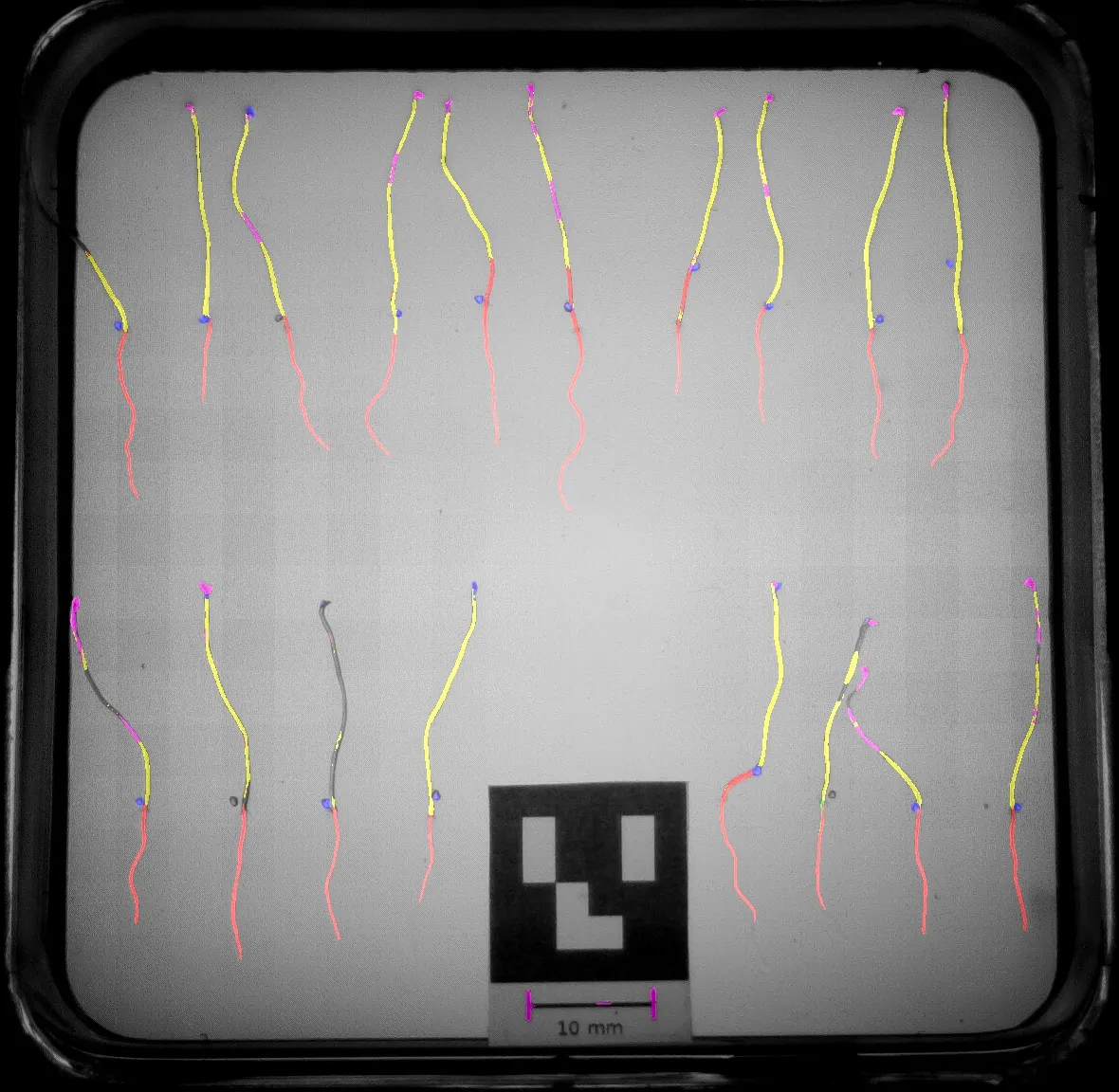
Old Model 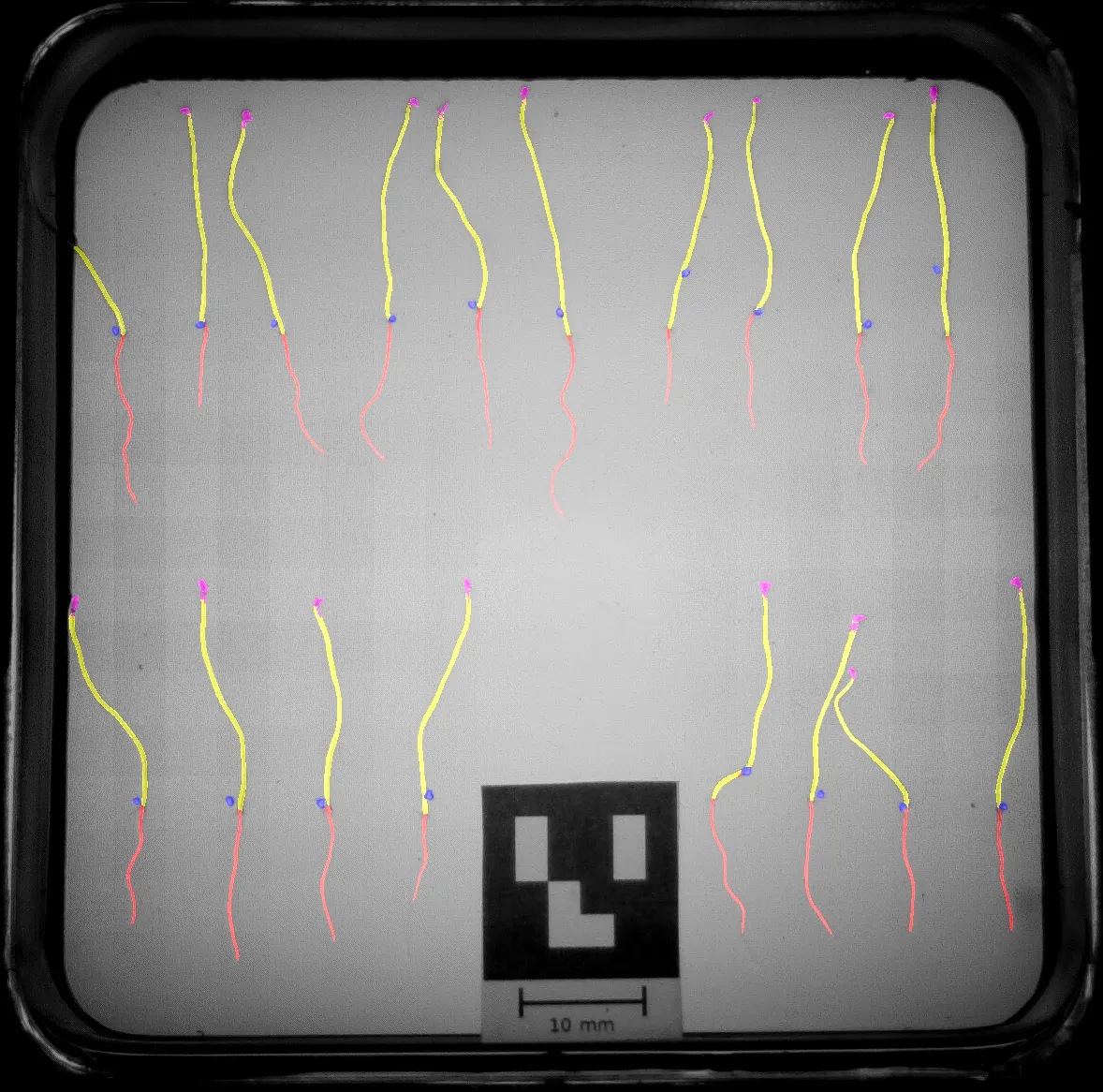
New Model -
A properly weighted moving average for smoothing between frames. After the model labels each photo, the software blends neighboring frames over time so a single bad frame doesn’t make the labels flicker. This blend used to add each new frame on top of a running total, so the total kept growing. It is now a true exponential moving average: each new frame counts for
1 − alphaand the history foralpha. The same alpha setting now behaves the same way for every frame.
More detail on how the model gets retrained is on the training page; the technical class-label reference lives on the architecture notes page.
Native MacOS Support
Section titled “Native MacOS Support”This project can now be installed and ran natively on MacOS machines
- One installer does the whole setup. Running
installer_conda_mac.shinstalls the Python environment the apps need (including Miniconda, if it isn’t already there), the QR-code library, and the segmentation model. - Real Mac apps to click on. The installer puts ChronoRoot Analysis, ChronoRoot Segmentation and ChronoRoot Image Aligner in your Applications folder, with shortcuts on your Desktop. There’s no terminal needed day to day.
- Faster segmentation on Apple Silicon. On newer Macs (M1, M2, M3 and later), segmentation runs on the Mac’s graphics chip instead of only the processor. Older Intel Macs still work, running on the processor.
- Updating is one step. Re-running the installer offers to download the latest version first, then brings everything else up to date to match.
Step-by-step instructions are in the install guide.
More Reliable Overall Pipeline
Section titled “More Reliable Overall Pipeline”New: Automatic Image Alignment
Section titled “New: Automatic Image Alignment”This project now ships an imageAligner app that corrects potential camera drift automatically before any measurement happens, using small printed markers placed in view of the camera as reference points.
Fewer Silent Mistakes in the Measurements
Section titled “Fewer Silent Mistakes in the Measurements”A number of bugs that produced wrong numbers, with no error message at all, have been found and fixed:
- A neighboring plant’s hypocotyl could get measured by mistake. If a plant’s own hypocotyl wasn’t visible yet, the software could grab a nearby plant’s instead, since it just picked the biggest matching blob it could see. It now anchors on where that specific plant’s seed was originally placed, so it can no longer borrow a neighbor’s growth.
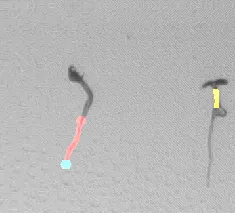
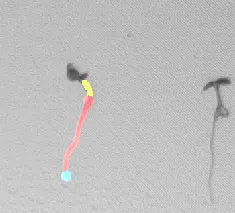
- Hypocotyl length no longer gets wiped to zero early in an experiment.
Hypocotyl growth is measured independently of the root, but a bug caused
it to be reported as
0on any frame where the root hadn’t been successfully detected yet, even though the real hypocotyl measurement was sitting right there. That data is no longer thrown away. - Improved root tracking algorithm The software used to treat the lowest point in the image as the tip of the main root. A side root that dipped below it, or a main root that curved sideways near the end, could make the software follow the wrong root and report its length as the main root length. The main root is now measured as the longest path from the root origin to a root tip, so it no longer depends on which root happens to sit lowest.
- Growth charts no longer come out empty or cut short for experiments that don’t photograph every 15 minutes. The chart-building step assumed a fixed 15-minute interval between photos; any other interval (say, every 3 hours) used to produce truncated or blank charts. It now adapts to whatever interval was actually used.
- Growth curves no longer flatten out artificially at the end. A smoothing step used to fabricate zero-valued data past the edge of the real measurements, which dragged down and flattened the last few points of every curve. The smoothing now stops at the real edge of the data instead of padding past it.
.tif/.tiffphotos are recognized. Experiments captured in those formats used to be silently skipped entirely, because the software only looked for.pngfiles.
Known Issues Still Being Worked On
Section titled “Known Issues Still Being Worked On”Nothing hides bugs here. These are known and tracked openly:
- Very small, newly-emerged roots or hypocotyls can occasionally disappear from a few frames of measurement before they’ve grown large enough to be reliably tracked. It usually self-corrects as the structure gets bigger.
- A step meant to clean up false-positive short roots detected right at the start of an experiment can, in rare cases, mistakenly wipe out real earlier measurements later in the same timelapse too. This is suspected but not yet confirmed as a cause of some “root length not calculated” reports.